
Wet Area Waterproofing
Seamless waterproofing solutions developed for bathrooms, showers, toilets, kitchens, laundries, balconies and other water-exposed areas.

Continuous Protection Beneath the Final Finish
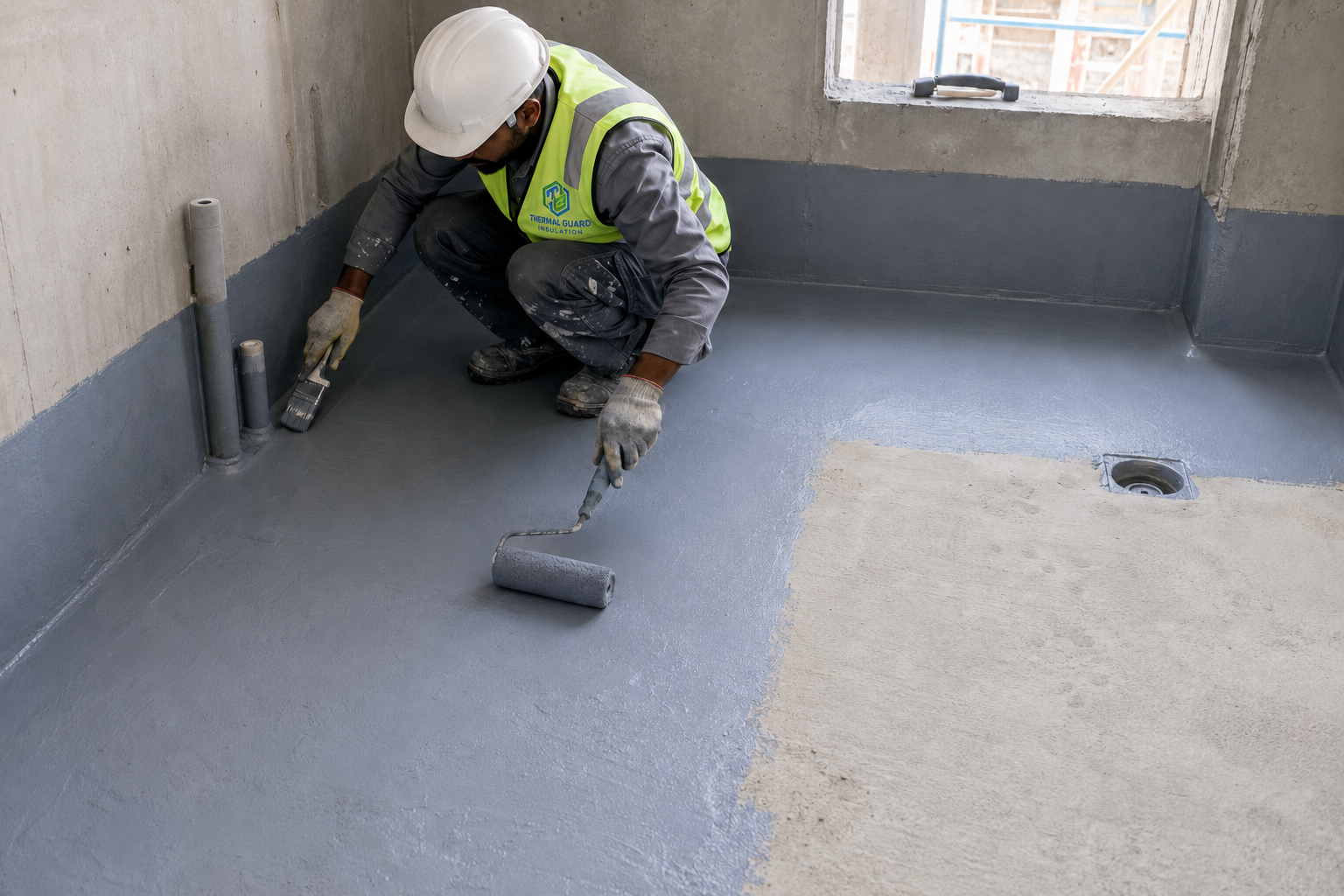
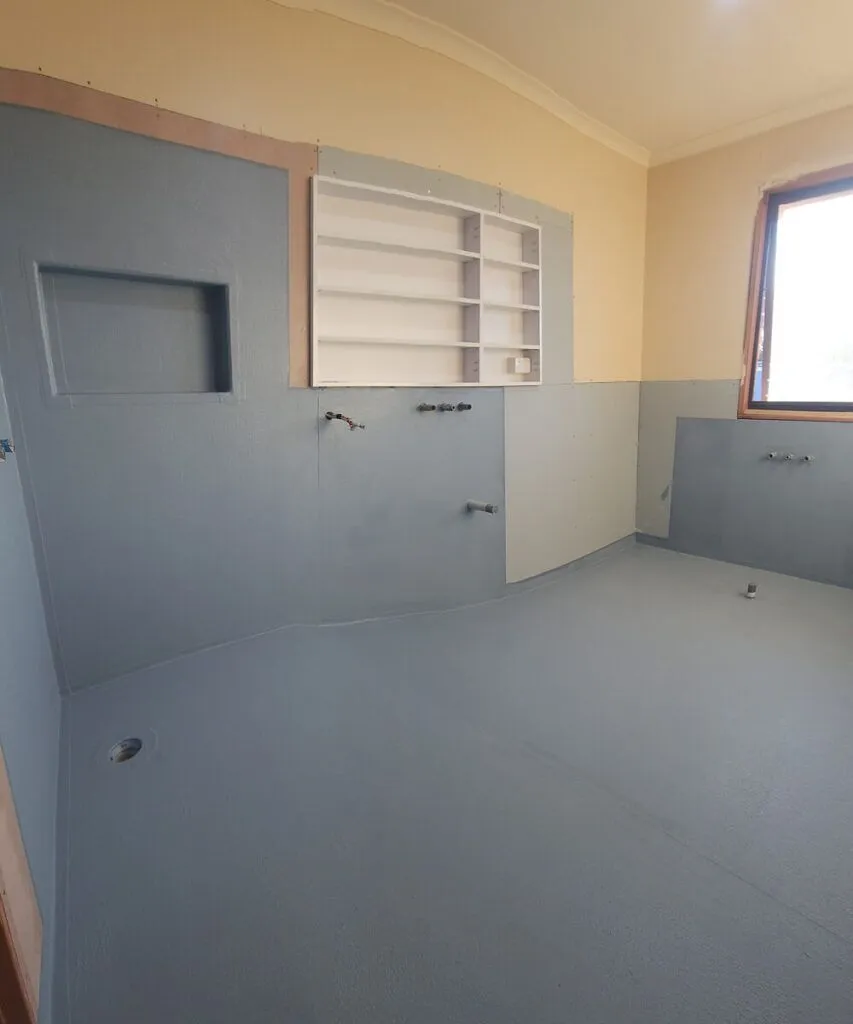
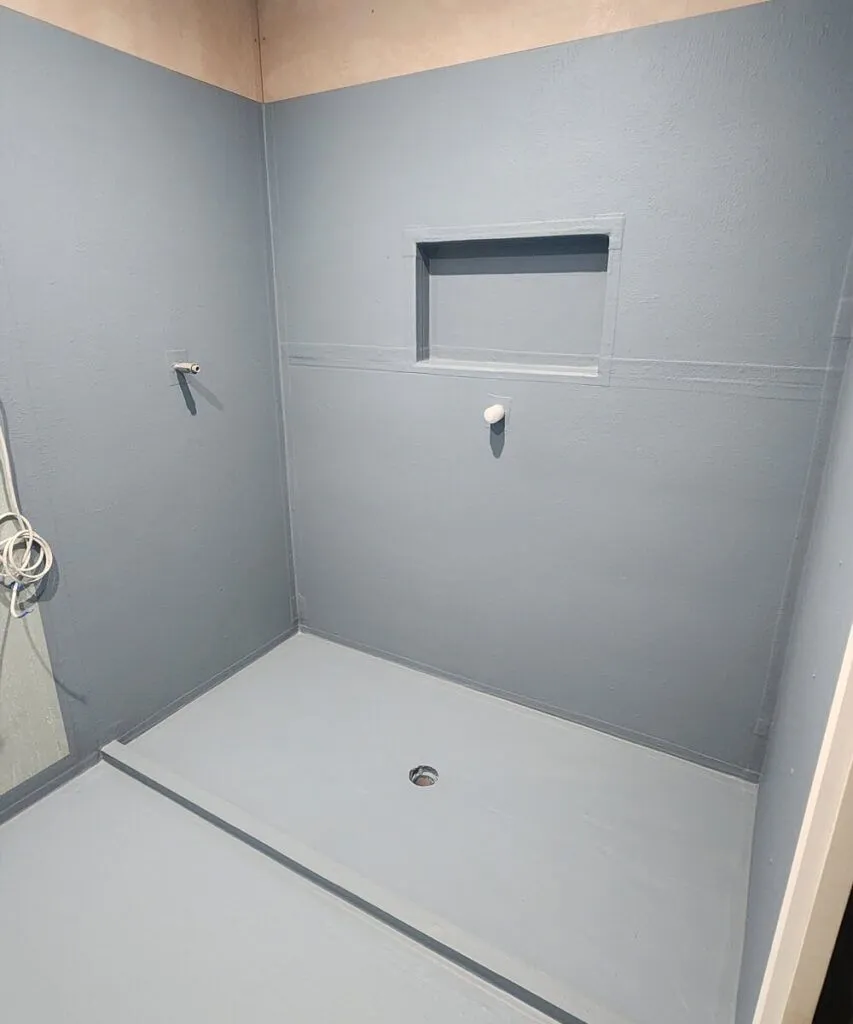
Our wet-area waterproofing system protects floors, wall upstands, corners, drains, thresholds and service penetrations with a continuous membrane. Every installation follows approved preparation, detailing, coating-thickness, curing and flood-testing requirements.
Wet Area Waterproofing for Bathrooms, Kitchens, Washrooms & Balconies
Wet-area waterproofing protects floors, walls, corners, drains, thresholds and service penetrations in bathrooms, toilets, showers, kitchens, laundries, balconies, terraces, ablution areas and other locations exposed to water or frequent cleaning.
Liquid coatings form a seamless membrane after curing, while sheet membranes provide factory-controlled thickness with sealed joints and laps. The correct system depends on the substrate, internal or external exposure, anticipated movement, final finish and approved project specification.
Wet Area Waterproofing Gallery
Click any image to view the complete application process in full size.
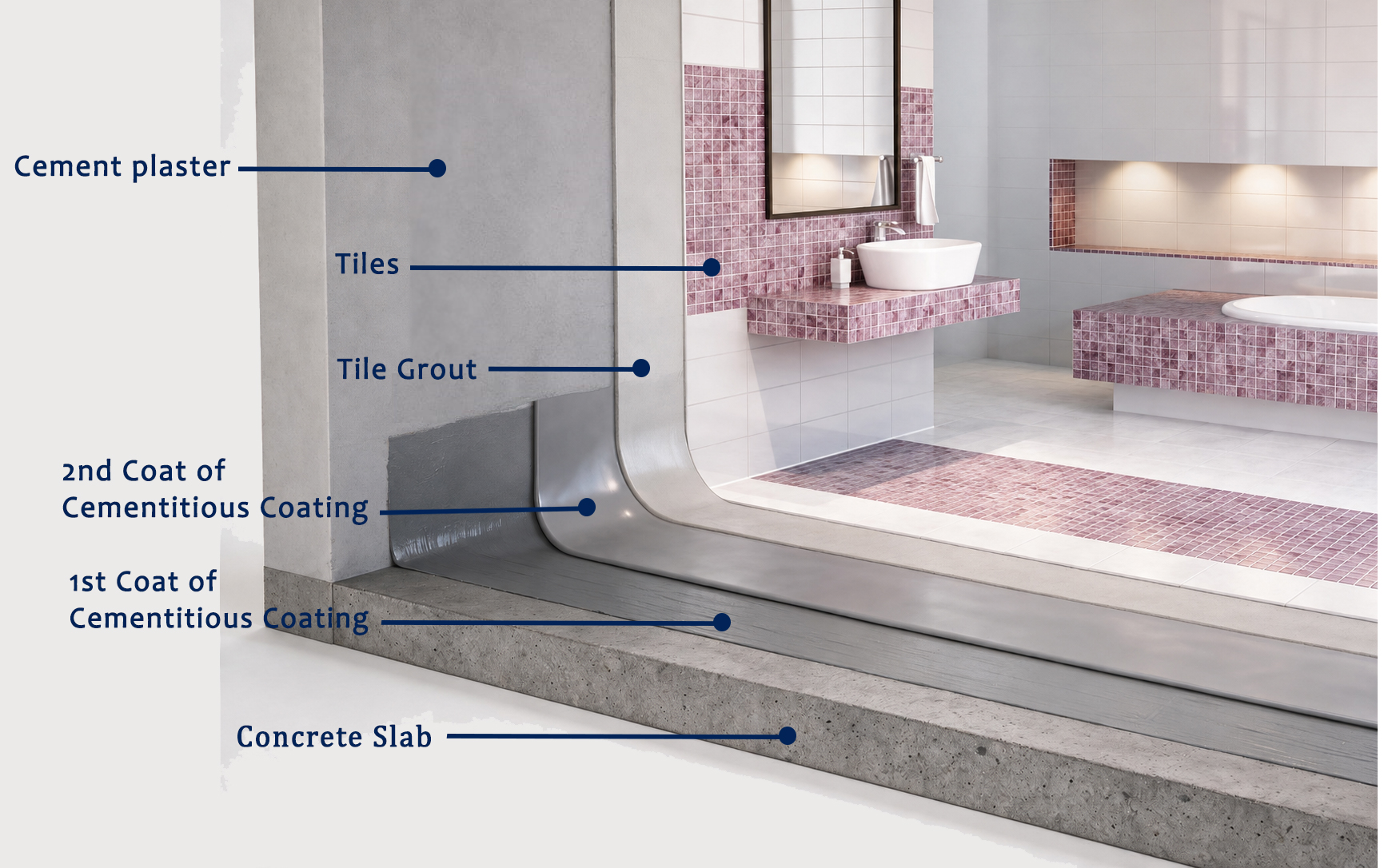
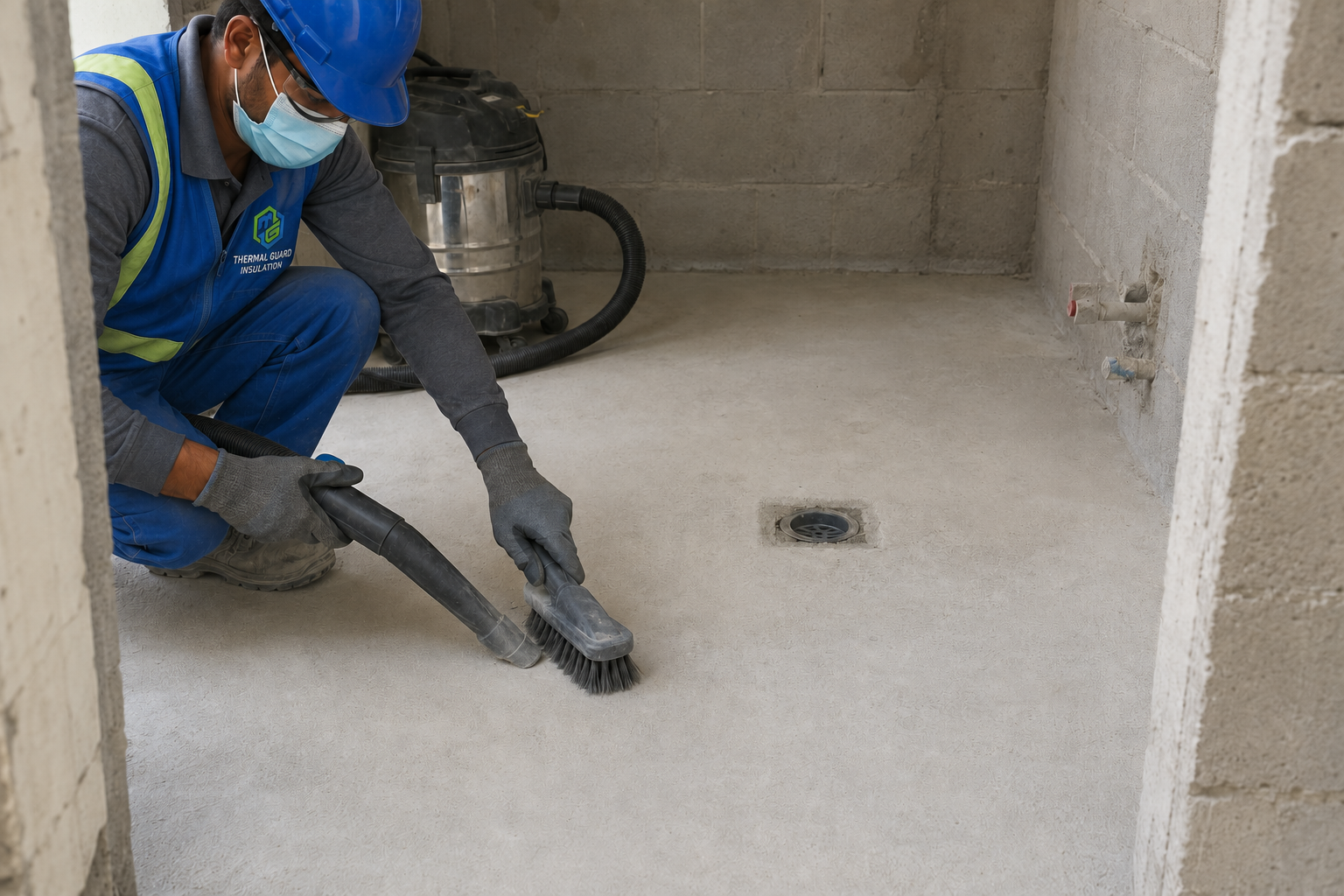
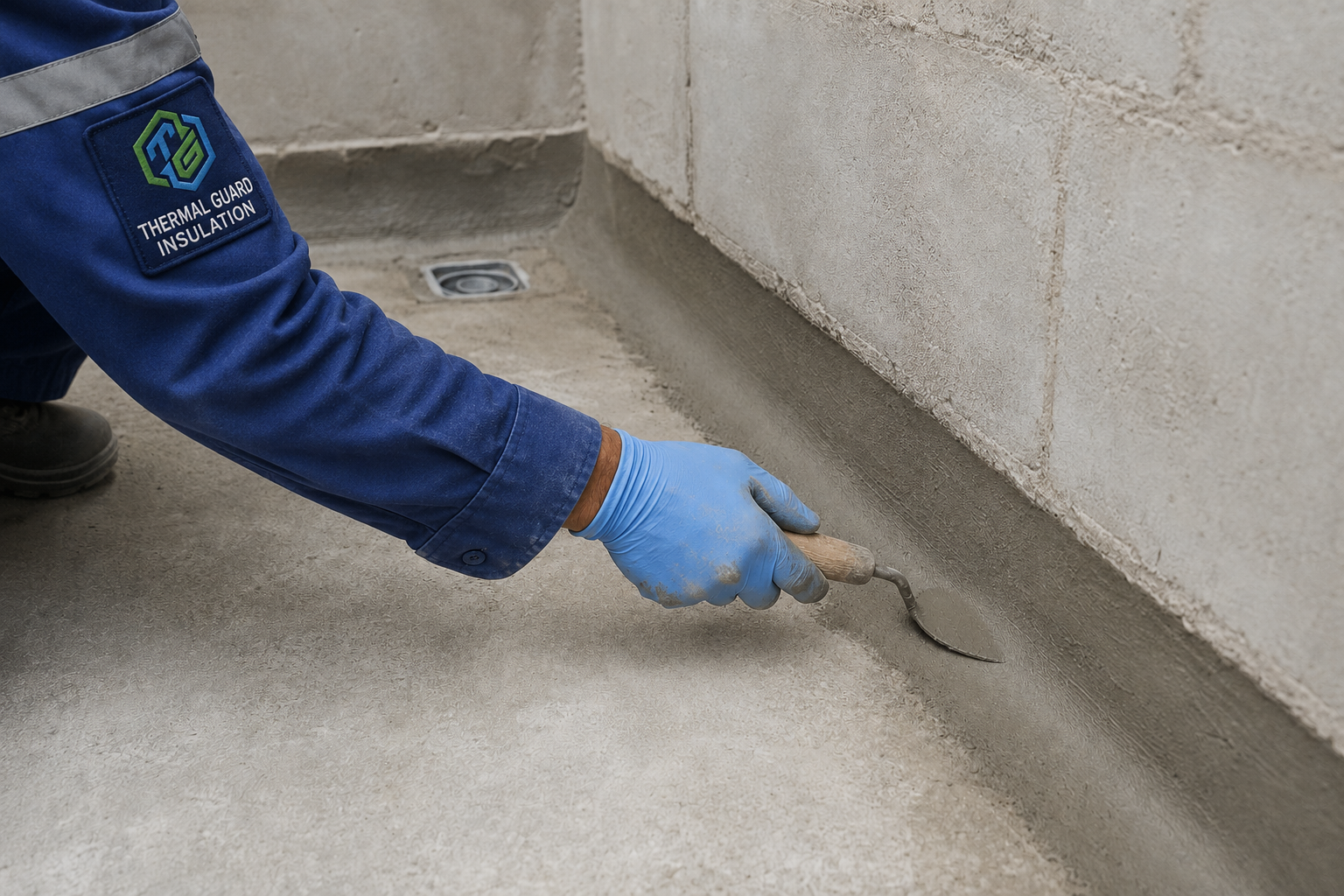
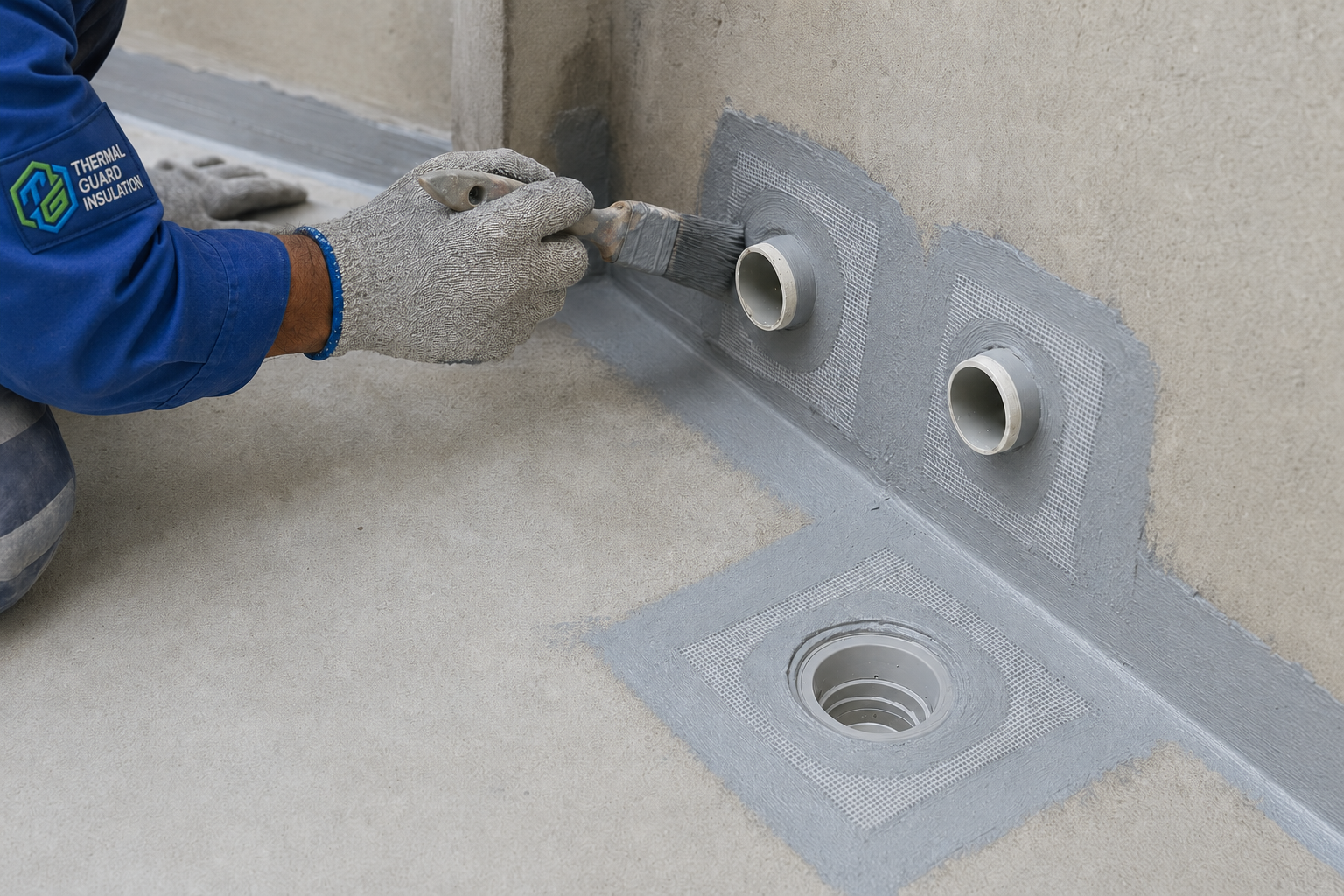

Typical Bathroom Waterproofing Build-Up
- Reinforced concrete slab and approved sloping screed
- Compatible substrate primer
- Flexible tapes at wall-floor junctions and movement details
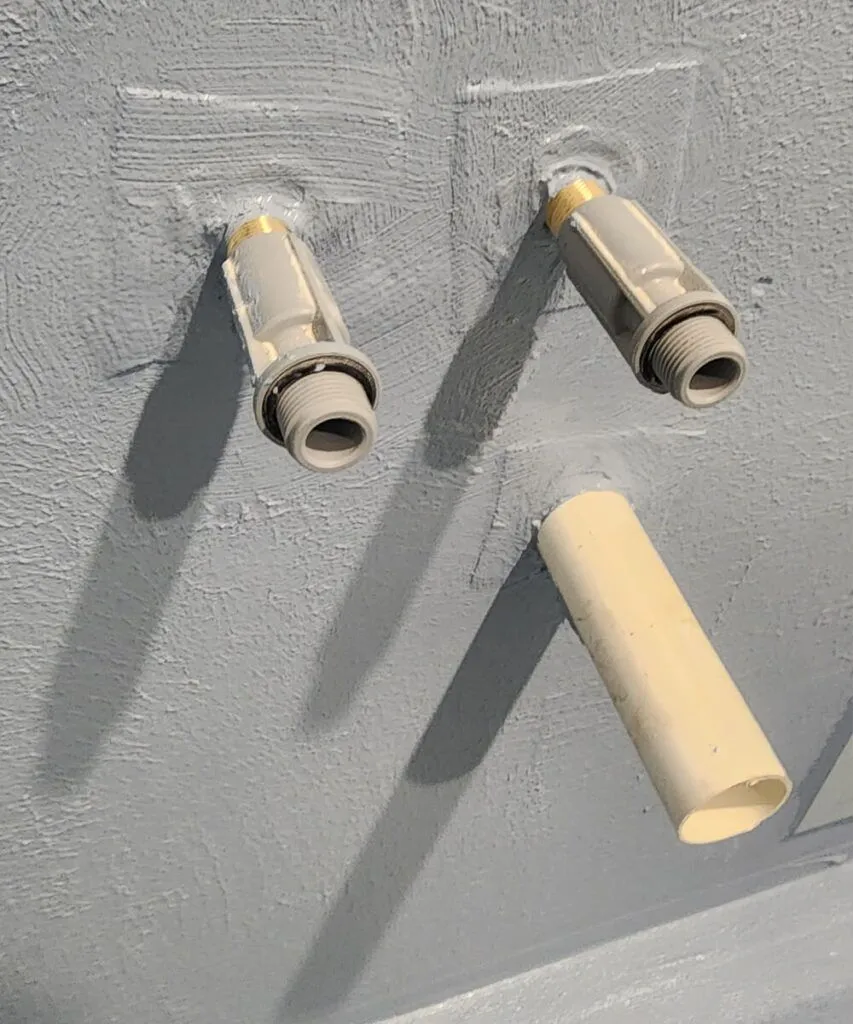
- Prefabricated collars around pipes and floor drains
- Specified liquid-applied coating or sheet membrane
- Flood test after complete curing
- Protection layer where required
- Compatible polymer-modified tile adhesive
- Tile finish, grout and flexible sealant at changes of plane
Typical Balcony Waterproofing Build-Up
- Concrete slab and screed sloped toward rainwater outlets
- Primer and reinforcement at junctions, outlets and thresholds
- Exterior-grade flexible waterproofing membrane
- Protection, drainage or bedding layer where specified
- Exterior-grade adhesive, tiles, grout and flexible perimeter sealant
Balconies require special attention to door thresholds, wall upturns, balustrade fixings, outlets, drip edges, movement joints, UV exposure, thermal movement and ponding water.
Corners, Drains, Pipes and Movement Joints
Waterproofing must connect continuously to drain flanges and pipe collars. Wall-floor junctions require flexible tape, fabric or another approved reinforcement. Structural movement joints must remain functional using compatible expansion profiles, joint tape, backer rod and movement-capable sealant. Simply painting around a drain or rigidly covering an active joint is not an acceptable waterproofing detail.
Flood Testing and Quality Control
A flood test is completed only after the membrane has fully cured. The outlet is temporarily sealed, the approved water level is maintained for the period stated in the project specification, and the slab soffit, walls and adjacent rooms are inspected. Any defect is repaired and the area is retested.
Quality records may include substrate and slope inspection, moisture checks, material batch verification, primer coverage, tape and collar inspection, material consumption, wet- and dry-film thickness, curing, flood-test results, repairs and protection before tiling.